WhatsApp Automation for Pakistani Businesses: A Practical Guide
Discover how Pakistani businesses use WhatsApp automation to handle orders, cut response times, and scale operations without adding headcount.
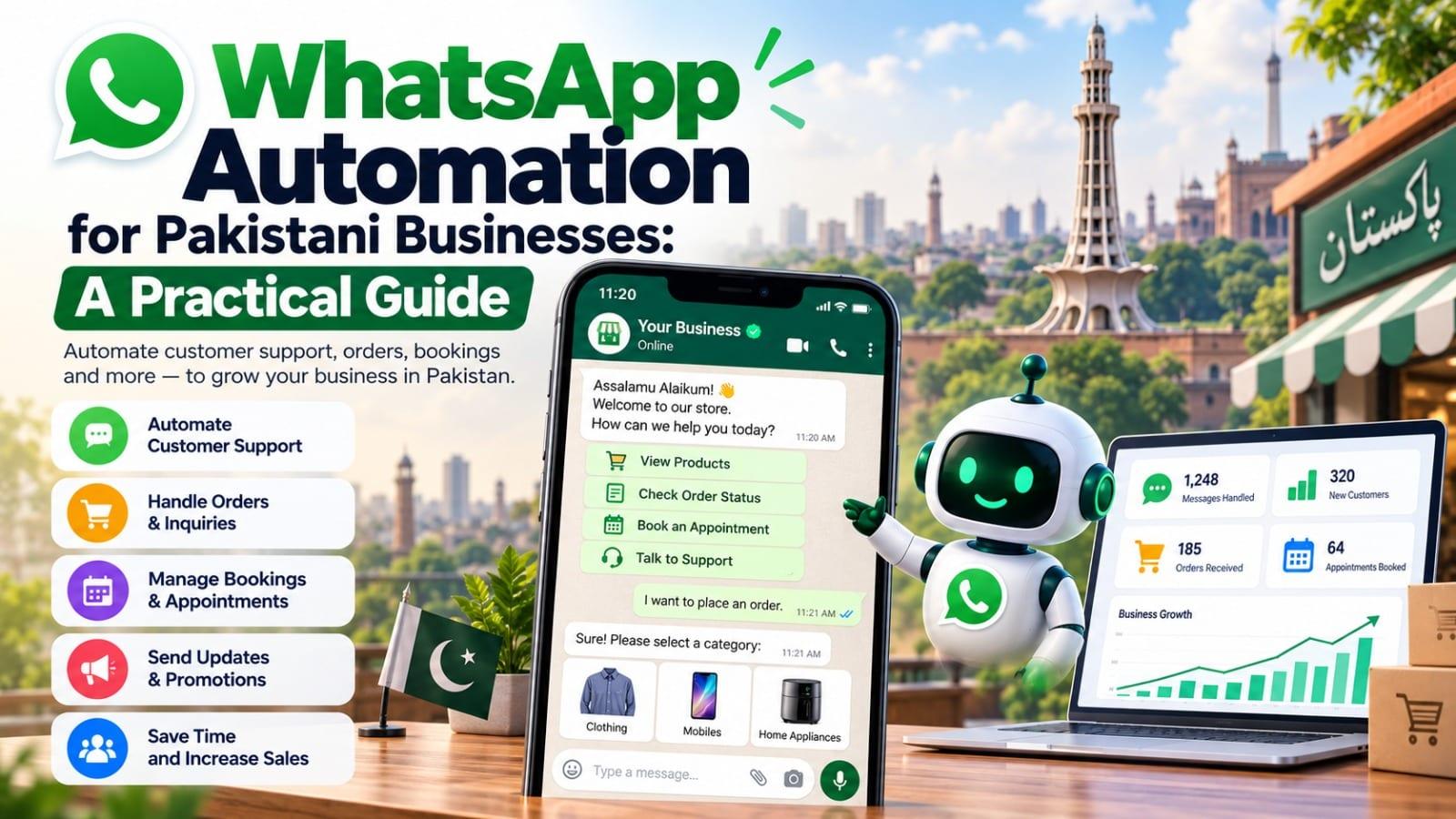
In Pakistan, WhatsApp is not just a messaging app; it is the infrastructure of commerce. From textile exporters in Faisalabad to boutique clothing brands in Lahore and grocery delivery startups in Karachi, customers expect businesses to be available on WhatsApp 24/7. However, manually replying to hundreds of routine inquiries every day burns out sales teams and leads to lost revenue when prospective buyers drop off due to slow response times.
At WebAI Systems, we build custom WhatsApp automation workflows and AI agents that integrate directly with your inventory, CRM, and order management systems. This guide explains how Pakistani businesses can leverage WhatsApp automation to capture leads, process orders, and automate customer support securely and efficiently.
Why Manual WhatsApp Management Fails at Scale
When a local retail brand or service provider starts growing, the traditional setup of two smartphones and three staff members huddled over screens breaks down quickly. Common failure points include:
- Missed Leads After Hours: Pakistani consumers shop late into the night. If a customer messages at 11 PM and gets no reply until 10 AM the next day, they have likely bought from a competitor.
- Human Error in Order Taking: Manual copy-pasting of customer names, addresses, phone numbers, and product SKUs into an Excel sheet or ERP leads to shipping errors and returned parcels.
- Inconsistent Product Information: Different sales agents quoting different prices or outdated stock levels damages customer trust.
- No Data Visibility: Management has zero insight into how many chats resulted in sales, average response times, or which agents are dropping leads.
Core Pillars of WhatsApp Business Automation
Implementing a robust WhatsApp automation strategy requires moving away from informal chats toward the official WhatsApp Business API (Cloud API). Here is what a professional setup involves:
1. Intelligent Chatbots and AI Agents
Basic keyword-based bots frustrate users because they easily break when customers use Roman Urdu, typos, or colloquial phrasing. Modern setups powered by Large Language Models understand Roman Urdu and English natively. A customer can type "Bhai yeh suit medium size mein available hai? Lahore delivery kitne din mein hogi?" and the AI agent instantly parses the intent, checks live inventory via your database, confirms the price, and provides an accurate delivery estimate.
2. Seamless ERP and CRM Integration
An automated WhatsApp workflow is only as good as its backend connection. When a customer confirms an order in chat, the automation system should automatically:
- Create a new order entry in your custom ERP.
- Deduct the stock from your warehouse inventory.
- Generate a digital invoice or payment link (via local gateways like PayFast, Nayapay, or SadaPay).
- Send an instant confirmation receipt back to the customer on WhatsApp.
3. Human Handoff Protocols
Automation should handle 80% of routine tasks such as checking order statuses, answering FAQs, and collecting shipping details. However, complex negotiations or high-value B2B inquiries must be smoothly transferred to a human agent with full context of the chat history.
Real-World Example: E-Commerce Order Flow in Pakistan
Consider an online cosmetics store in Lahore receiving 500 daily orders through Instagram ads directing traffic to WhatsApp. Without automation, this requires four full-time agents just to collect addresses and verify COD (Cash on Delivery) orders.
With a WebAI Systems WhatsApp pipeline, the process looks like this:
- The customer clicks an ad and lands in WhatsApp with a pre-filled message: "Hi, I want to order the Matte Lipstick Set."
- The system replies instantly with an automated product card, shade options, and a prompt for their city.
- Once the shade and city are selected, the bot collects the delivery address and phone number, validating the phone number format instantly.
- The order is pushed to the courier API (such as Leopards, TCS, or Trax) to generate a tracking number, which is sent back to the customer via WhatsApp along with estimated delivery days.
This entire interaction takes under 90 seconds, requires zero human intervention, and operates 24 hours a day, 7 days a week.
Addressing Security and Data Privacy Concerns
Many business owners in Pakistan worry about data privacy when connecting third-party tools to their customer lists. Using the official Meta Cloud API ensures end-to-end encryption and compliance with international data standards. Furthermore, when hosted securely on your private cloud infrastructure or compliant servers, your customer phone numbers and purchase histories remain strictly confidential and are never shared with ad networks.
How to Get Started with WebAI Systems
Automating your WhatsApp channels does not mean replacing the human touch; it means removing friction so your team can focus on closing deals and growing the business. Whether you need a simple order-booking bot or a complex multi-lingual AI agent integrated with your custom ERP, WebAI Systems builds scalable, production-ready software tailored for the Pakistani market.
Ready to transform your customer communication? Contact WebAI Systems today to schedule a consultation with our engineering team.
- #whatsapp automation
- #ai agents
- #pakistan business
- #erp integration
- #chatbot development