
Blog · WhatsApp
How to Automate WhatsApp Customer Support With AI
A technical and operational guide to deploying autonomous AI agents on WhatsApp for 24/7 customer queries, real-time order tracking, and CRM sync.
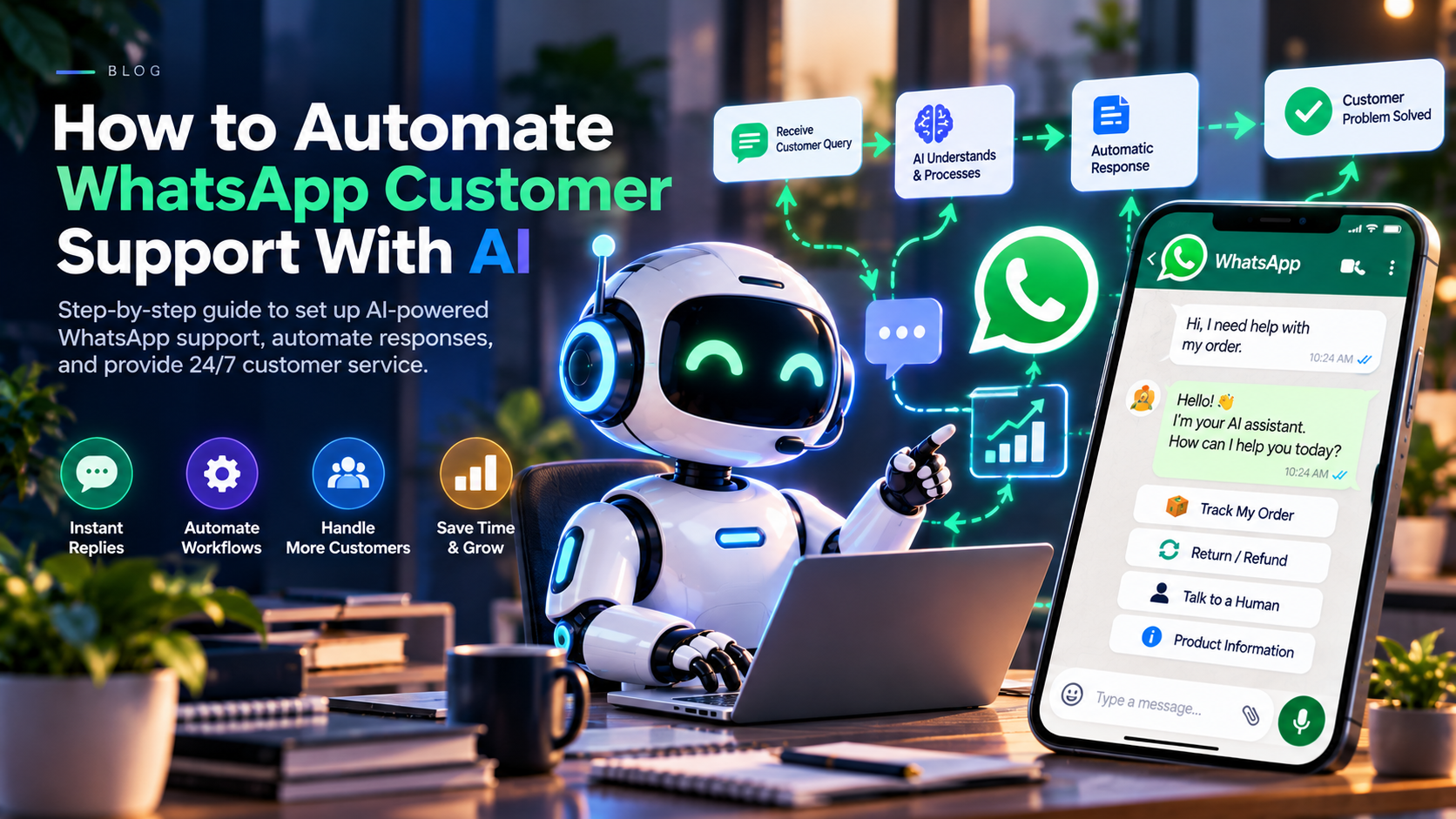
In markets across Pakistan, the Middle East, Southeast Asia, and Latin America, WhatsApp is not merely a messaging app; it is the primary operating system for commerce. Customers expect instant answers on product specs, delivery updates, and returns inside the chat thread rather than submitting web forms or emailing a support desk. However, traditional rule-based chatbots—those rigid systems forcing users to navigate numbered menus—consistently alienate buyers. When a customer types a natural question or switches dialects, legacy bots fail.
The Shift from Decision Trees to Contextual AI Agents
Modern WhatsApp automation replaces fragile decision trees with conversational AI agents powered by Large Language Models (LLMs), Retrieval-Augmented Generation (RAG), and deterministic API integrations. Instead of forcing a user into a pre-defined path, an AI agent understands unstructured inquiries, identifies intent, references your live business data, and takes actions in external software.
A production-ready WhatsApp AI support system does not just answer generic questions; it securely checks database records, confirms shipping details with couriers like Trax or TCS, logs support tickets into your internal CRM, and routes high-friction disputes to human agents without dropping conversational context.
Core Architecture of a Production WhatsApp AI System
Building an autonomous support workflow requires four distinct layers running in coordination:
- The Ingestion Layer: The official WhatsApp Business Cloud API connected via Meta Business Manager. This layer receives incoming webhook payloads containing message text, voice notes, media files, and phone metadata.
- The Orchestration & Middleware Engine: A backend service (typically built on Python/FastAPI or Node.js) that validates webhooks, handles session state, manages deduplication, and routes events.
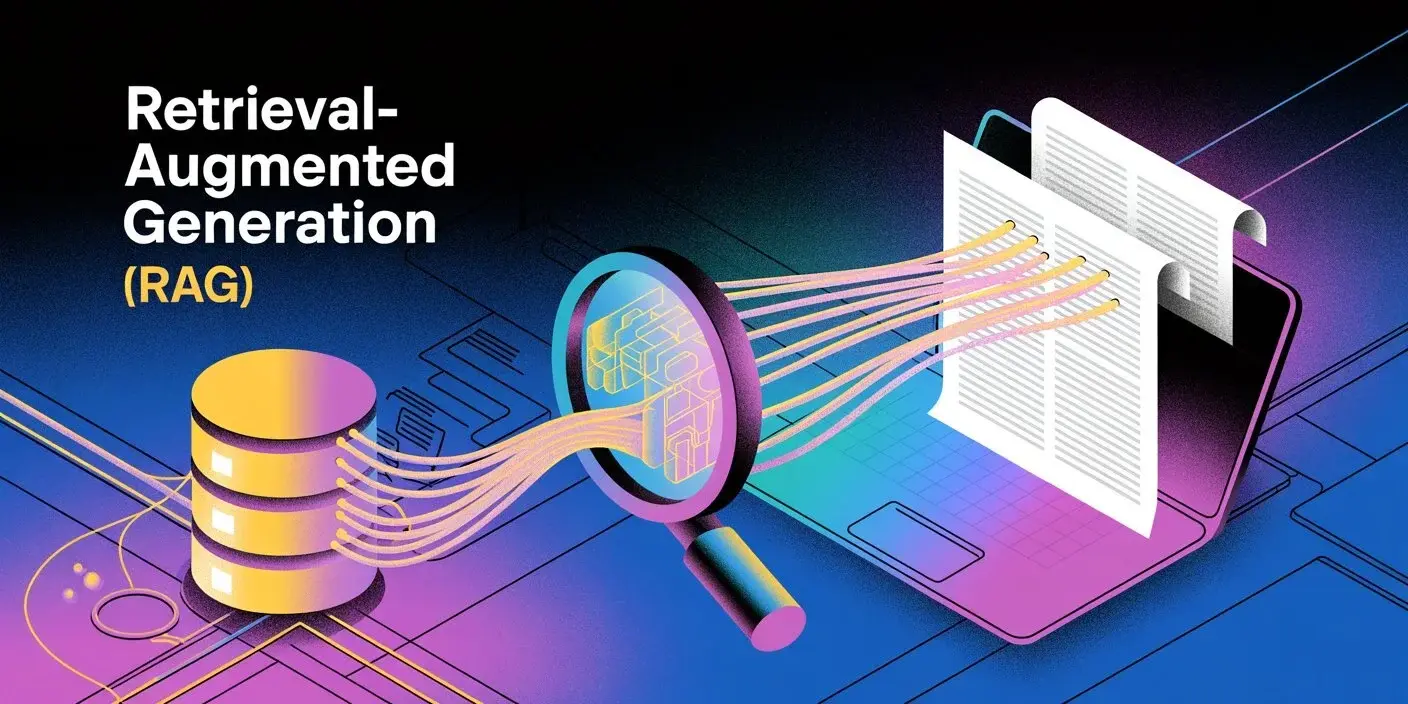
- The Intelligence & RAG Pipeline: An LLM orchestrator connected to a vector database (such as Pinecone, Qdrant, or pgvector). It pulls relevant business policies, return conditions, and product manuals to answer questions grounded entirely in verifiable company data.
- The Execution / Tool-Calling Layer: API connectors that allow the AI model to query internal systems—such as your custom ERP, Shopify store, warehouse management system, or courier tracking portals.
Step 1: Establishing the WhatsApp Business Cloud API
Never run customer service automation on unofficial Web-scraping libraries or modified WhatsApp Web instances. Unofficial tools risk immediate phone number bans, offer no service level agreements, and cannot handle concurrent request spikes during marketing campaigns.
To deploy reliably, register a dedicated phone number with the official WhatsApp Business Cloud API through Meta's developer console. The setup involves:
- Verifying your Meta Business Manager account to unlock higher messaging limits (scaling from 250 service conversations up to 1,000, 10,000, or unlimited per day).
- Generating permanent system user access tokens and configuring webhook subscriptions for messages and message_deliveries.
- Understanding the 24-hour customer service window: when a user sends a message, businesses have a free 24-hour session to exchange free-form automated messages without paying template fees. Outside this window, automated outreach requires pre-approved template messages.
Step 2: Implementing Grounded RAG to Prevent Hallucinations
The single greatest operational hazard of generative AI in customer support is hallucination—the model inventing return policies, discount vouchers, or stock numbers that do not exist. To prevent this, the AI agent must never rely solely on baseline model knowledge.
Instead, employ Retrieval-Augmented Generation (RAG). Convert your standard operating procedures, warranty policies, sizing charts, and product documentation into structured chunks, vectorize them, and index them in a vector database. When a customer asks, "Can I exchange this lawn suit after the seal is broken?", your orchestrator performs a similarity search, retrieves the exact policy clause, and injects it into the system prompt with strict guardrails:
"Answer the user using only the provided context. If the policy does not state an answer, inform the customer that an agent will verify their request, and trigger the handoff protocol. Never invent store policies or discounts."
Step 3: Enabling Real Actions via Function Calling
Answering static FAQs solves only a fraction of customer service volume. Over 60% of inbound retail and distribution queries center on transactions: "Where is my parcel?", "Do you have blue in medium in stock?", or "Can I change my delivery address?"
Modern LLMs support function calling (tool execution). You define specific API endpoints in JSON schema format inside the system: for example, getOrderStatus(order_id, phone_number) or searchInventory(sku, size). The process operates systematically:
- The customer asks: "Track order #4921 please."
- The model identifies the intent and extracts the parameter
order_id: 4921. - Your middleware executes an authenticated GET request against your internal ERP or Shopify API.
- The API returns:
{status: 'Dispatched', courier: 'TCS', tracking_code: '902184912', eta: 'Tomorrow 4 PM'}. - The AI summarizes this payload in natural, friendly language and sends it to the customer on WhatsApp in under two seconds.
Step 4: Managing Dialects, Roman Urdu, and Voice Notes
In Pakistan and across regional hubs, users rarely type in standard, formal English or pristine script. They communicate in Roman Urdu, mix English and native languages, make spelling errors, or send voice notes while driving.
A competitive automation engine must account for these behavioral patterns:
- Roman Urdu & Code-Switching: Modern foundation models handle Roman Urdu exceptionally well if system prompts provide sample colloquial conversations and explicit instructions to mirror the user's selected language. If a customer writes, "Bhai mera parcel kab dispatch hoga?", the agent should reply in clear, professional Roman Urdu rather than sterile textbook English.
- Voice Note Ingestion: WhatsApp users heavily favor audio messages. Your webhook listener should extract the audio URL from Meta's API, forward the binary to an automated transcription engine (like Whisper), and feed the resulting text into the agent pipeline. The response can be returned as clean text or converted back to natural audio using neural text-to-speech.
Step 5: Automated Escalation and Human-in-the-Loop Handoff
Automated systems must know their limits. If a customer displays heightened frustration, uses aggressive language, or raises a sensitive payment dispute, the AI agent must yield to a human operator.
Build an automated sentiment monitor. When confidence scores drop below a set threshold, or when specific keywords (e.g., "fraud", "lawyer", "scam", "manager") appear, the orchestration layer triggers an escalation hook. This flags the ticket on your internal dashboard (such as a custom CRM, Zendesk, or Slack channel), silences the AI bot for that specific phone number, and notifies a live support agent with a synthesized summary of the chat history so the customer never has to repeat themselves.
Measuring Return on Investment
When properly engineered, AI-powered WhatsApp customer support delivers direct financial and operational returns within weeks:
- 70% to 85% Deflection Rate: Routine status updates, policy questions, and inventory searches are resolved instantly without human labor.
- Instant First Response Time (FRT): Responses drop from 45 minutes down to under 5 seconds, capturing buying intent while prospects are active.
- Drastic Reductions in Return to Origin (RTO): E-commerce stores in Pakistan often suffer from failed Cash-on-Delivery orders. An automated AI agent that contacts the buyer on WhatsApp immediately after order placement to confirm the address and phone number significantly cuts shipping failure rates.
Building for Scale
Automating WhatsApp customer support with artificial intelligence is no longer an experimental gimmick; it is critical infrastructure for high-growth enterprises. By integrating the official Meta Cloud API with resilient RAG pipelines and custom ERP connectors, businesses eliminate communication bottlenecks, control support payroll, and deliver continuous, personalized service at scale.
Want this built for your business?
We ship AI agents, RAG systems, WhatsApp automation and custom ERP from Lahore — for teams in Pakistan and worldwide.